Costa Rica - 17/1/2026 to 1/2/2026
This was a full-on birding trip, over 15 days (from Naturetrek) with an excellent Costa Rican guide; Erick
Castro. There were 10 of us in the group: birding novices, those concentrating
on photography, and the rest ardent birders (including Matt Plenty).
Neither Matt, or I, had been to the Americas (N or S), so
this was going to be a huge challenge to get to grips with a whole set of
completely new birds ! We were totally reliant on our guide for the first week,
before we started to id the commonest birds.
Arrival (17th Jan) After
an exhausting, near 24 hour journey from Bristol, via coach to Gatwick and
direct flight to San Jose, we arrived at dusk to see c50 Great-tailed
Grackles going to roost on the airport buildings.
Day 1 (18th Jan) Buena Vista Hotel,
Alueja, San Jose
Hotel grounds (5:45-7am) In the
entrance to the hotel we saw the first Hummingbirds; Rufous-tailed (seen
on all but 4 days of the rest of the holiday) and Blue-vented (aka
Steely-vented). There were also, Grey-headed Chachalaca, Red-billed
Pigeon, White-winged Dove, Tropical Kingbird, plus Crested
and Yellow-headed Caracaras.
Strolling around the hotel grounds we found the first Lesson’s
Motmot (aka Blue-crowned), Hoffman’s Woodpecker, Northern Yellow &
Tennessee Warblers, Yellow-throated Vireo, White-crowned Parrot
(6) and Rufous-naped Wren (a very large species, 18cm long, which
followed us wherever we went with its un-wren-like, loud, musical notes.) A
nice surprise for us was a Rose-breasted Grossbeak, and also Baltimore
Oriole, Summer Tanager, Black-headed Saltator and Crimson
Saltator (aka Greyish). Flying overhead were Crimson-fronted Parakeets,
Black & White Swallows and 5 Vaux’s Swift. The first Variegated
Squirrel was also seen.
I did not take my camera for this first outing, as it was
enough to just try and get on the birds and take in whole new families that I had
never heard of ! (All of these species would be encountered again during the
trip.)
Transit We travelled south from
San Jose, towards the Talamanca Mountains. The first of the ubiquitous Black
& Turkey Vultures were seen from the coach, along with Feral
Pigeon and Cattle Egret. A Wood Stork circled near a toilet
stop and a Broad-winged Hawk sat on a post.
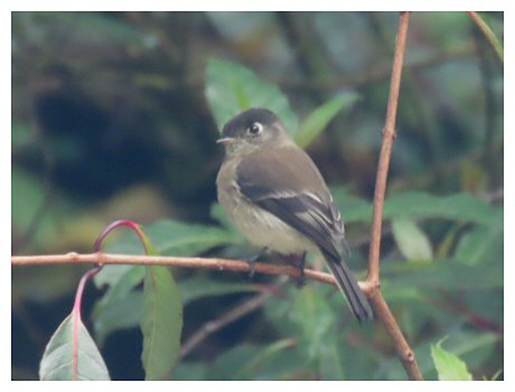
Paraiso Quetzal Lodge Our first endemic
came in the form of a Black-capped Flycatcher.
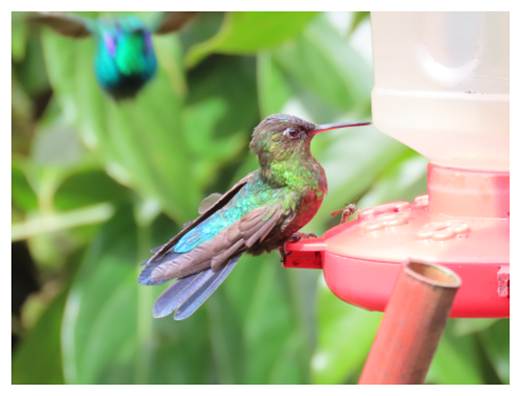
We then had the first bewildering view of a hummingbird feeder - look at the
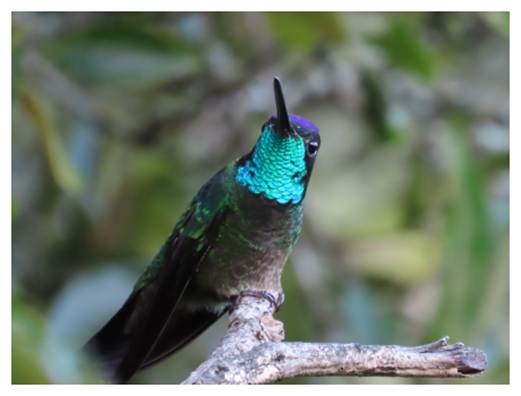
flashes of colour on the breast of the Fiery-throated Hummingbirds !
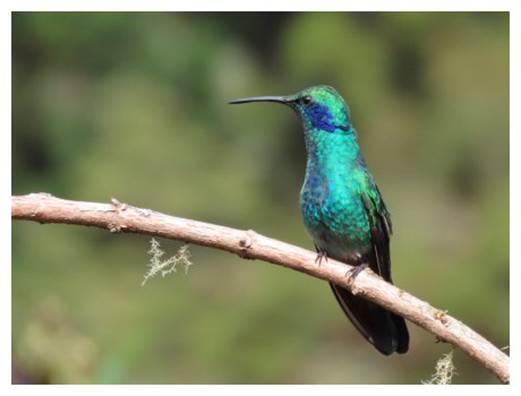
Also the bluey-violet on the cheek of Lesser Violetear. The White-throated
Mountaingem is
another endemic.
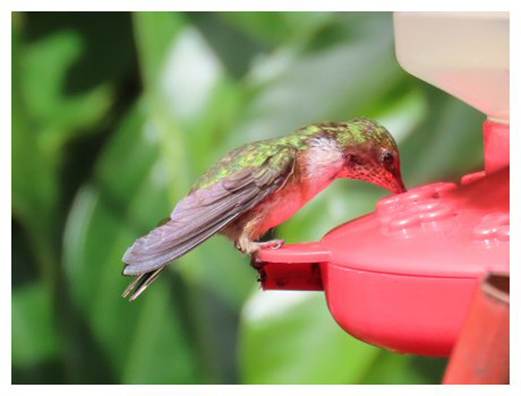
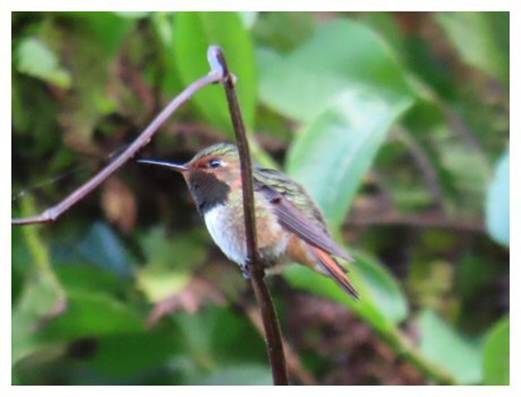
There were also tiny Volcano Hummingbirds (just 8cm long)
.
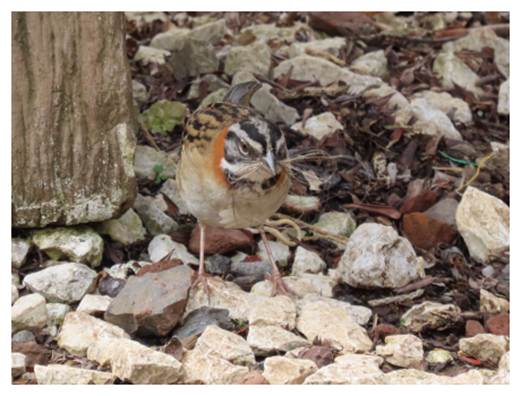
I thought that I had found something unusual with this nicely
coloured Rufous-collared Sparrow collecting nest material, but it was
common around the lodges at higher elevations.
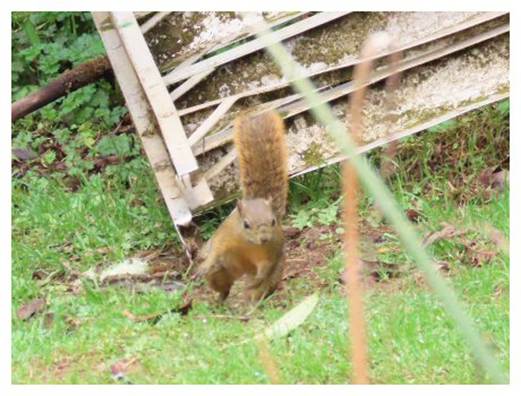
A second species of squirrel was this Red-tailed
Squirrel.
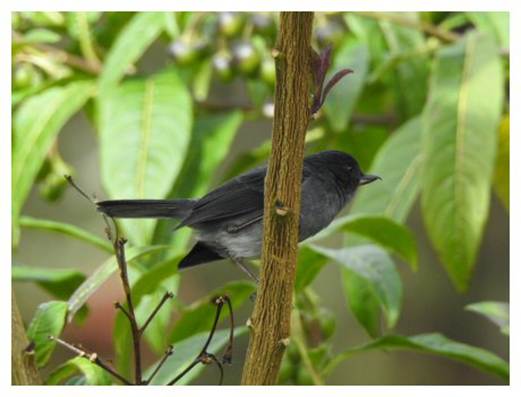
Look at the extraordinary bill-tip on this male Slaty
Flowerpiercer! We also had the female.
(Photo by Matt Plenty.)
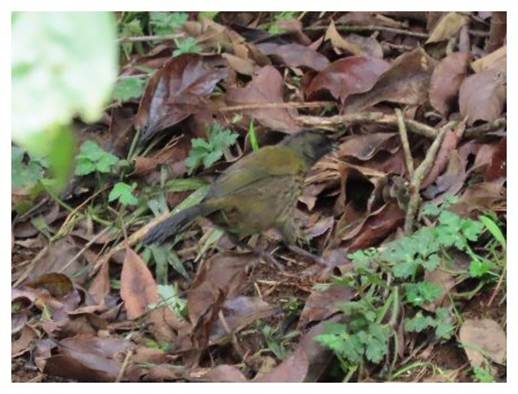
The Large-footed Finch is
well-named, scratching around in the leaves.
And the endemics kept coming at this garden in the Talamanca
Mountains (being separated from the east of Costa Rica by a range of volcanoes)
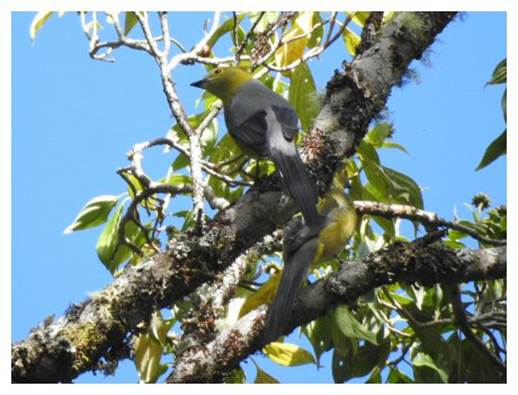
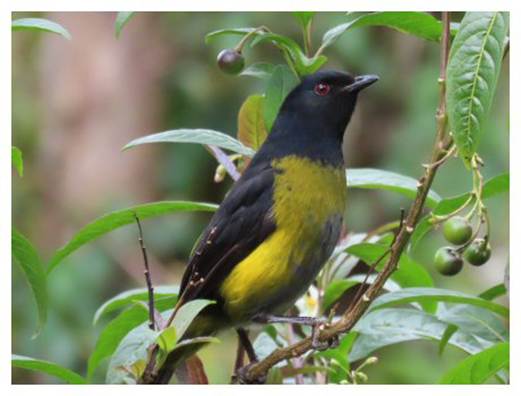
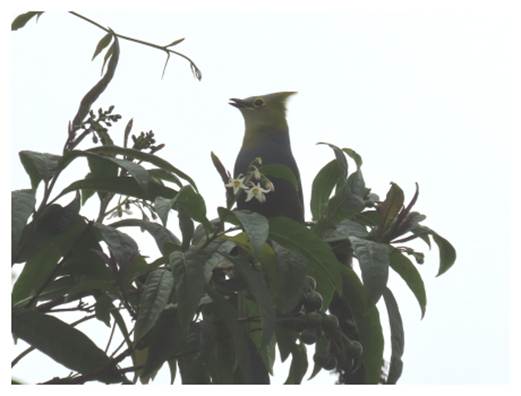
with beautiful Long-tailed Silky-flycatcher (photo
by Matt Plenty) and Black-and-yellow Silky-flycatcher.
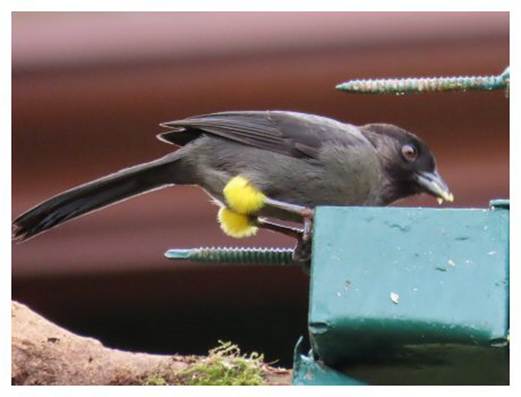
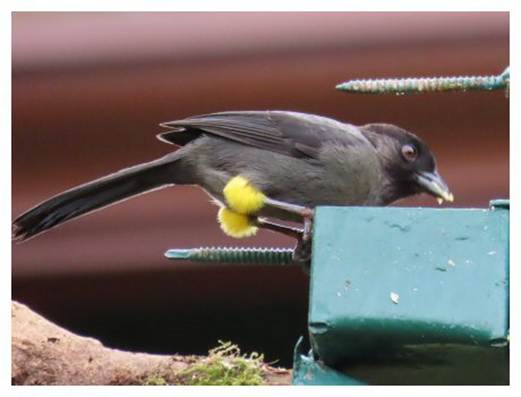
This extraordinary looking, and aptly named, Yellow-thighed
Finch became familiar to us, but how did such a crazy colour-scheme
evolve ?!
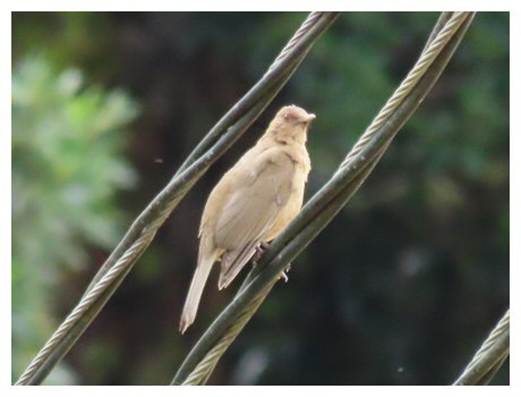
This was our first taste of the Clay-coloured Thrush
the National bird of Costa Rica. Out of all the amazingly colourful birds, this
was chosen because it is distributed across the whole country (apart from the
very highest peaks) and its song signifies the coming of spring when crops can
be planted. We got good comparison views of the similar Mountain Thrush
with its dark bill, and also saw a Sooty Thrush here.
.
Before we left, I also had: 24 White-collared Swift
(as large as Alpine Swifts, but with white collar rather than white breast), Mistletoe
Tyrannulet (split from Paltry Tyrannulet), Flame-coloured Tanager, Melodious
Blackbird, Yellow-bellied Siskin and the wonderfully named, and
coloured, Golden-browed Chlorophonia.
The next stop was on a mountain road where our guide had
noted some wild Avocados were fruiting (favourite food of the
legendary Quetzal).
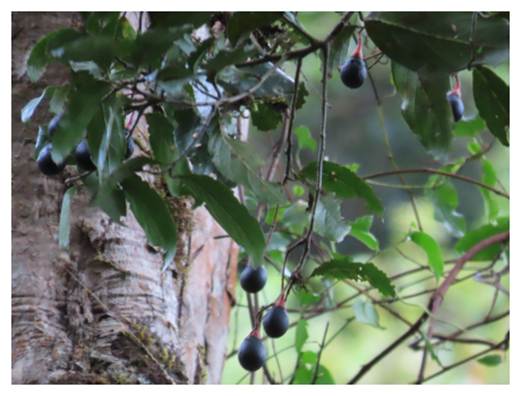
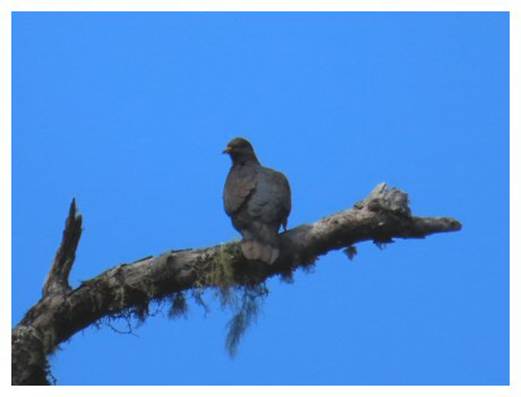
This gave the first view of the Band-tailed Pigeon
(similar to our Woodpigeon, but with a limited range at high altitude) a
juvenile without the white neck-ring.
Then we found a roving flock of 6 Sooty-capped
Chlorospingus (another
great name!), with associated flock of American Warblers: Wilson’s,
Golden-winged, Black-and-white, Black-throated Green and (the local) Flame-throated
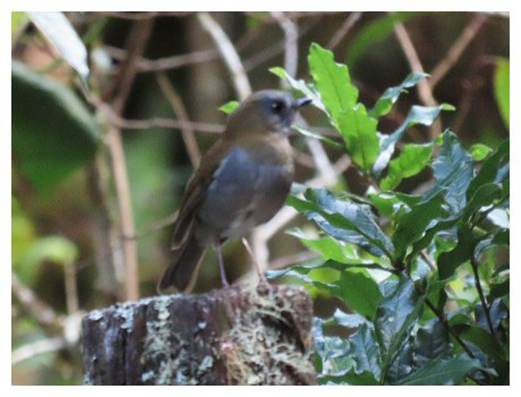
Warbler. Other hangers on, were Black-billed
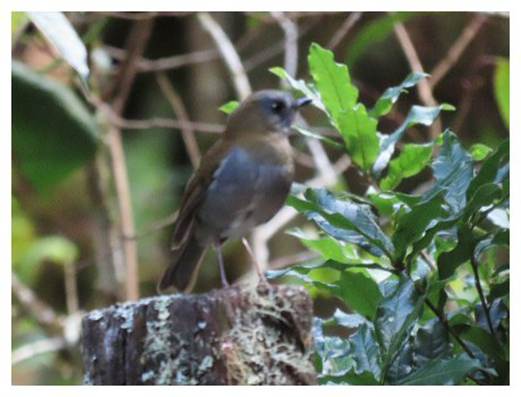
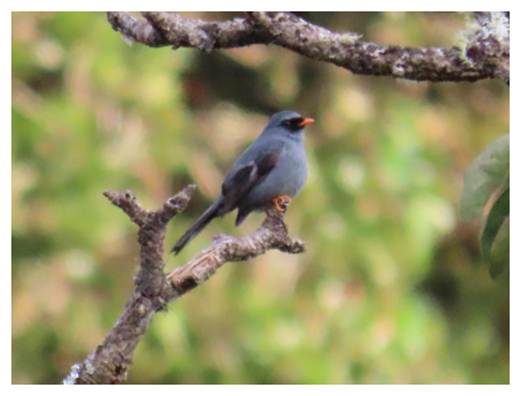
Nightingale-Thrush which briefly stood on a post before disappearing (photo
below), Collared Whitestart (was
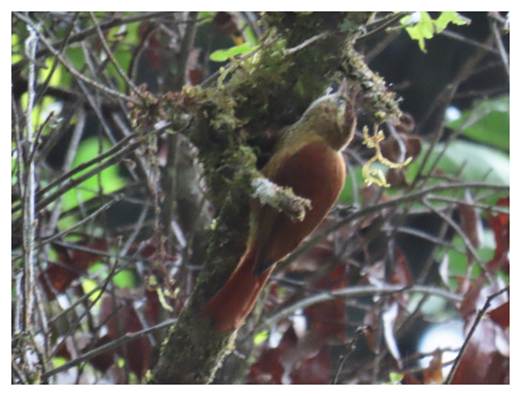
called Redstart), Mountain Elaenia, 3 Ruddy Treerunner (2nd photo below), Northern
Tufted and Black-capped Flycatcher and
Barred Beccard.
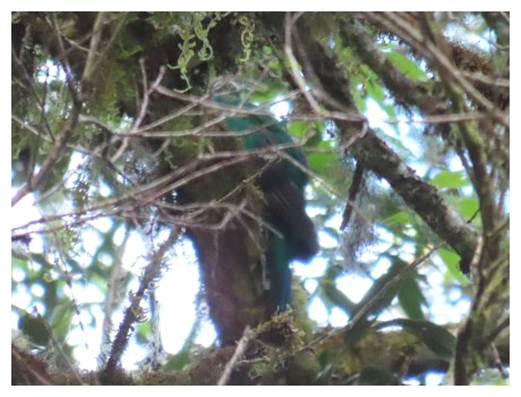
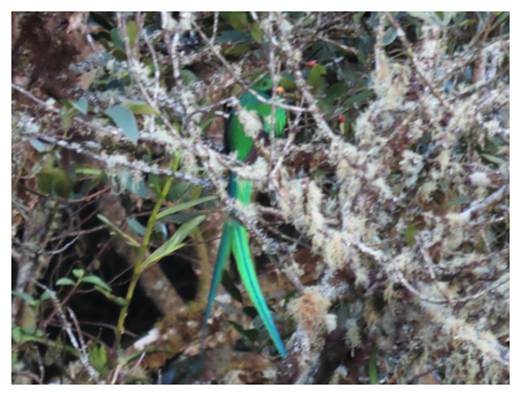
Then, our guide spotted a Resplendent Quetzal deep in the
branches of a tall tree. He was still trying to get people on it, when it flew
across the road right over my head, and I got a view of the magnificent red
breast and white under-tail, followed by green. Luckily, it went into another
tree, but it was incredibly well hidden. Day one, and already got a Quetzal !
This is my best attempted photo. (More on this species later . . .)
Savagre
Lodge In the evening we walked the grounds of our home for two
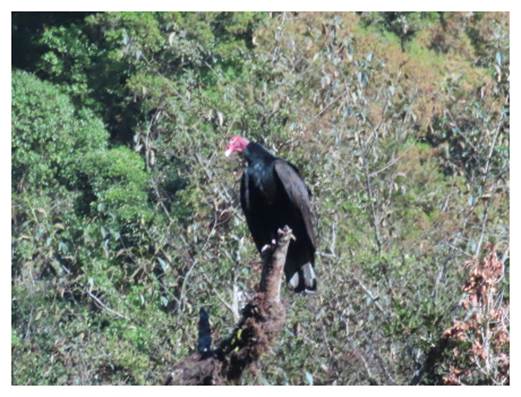
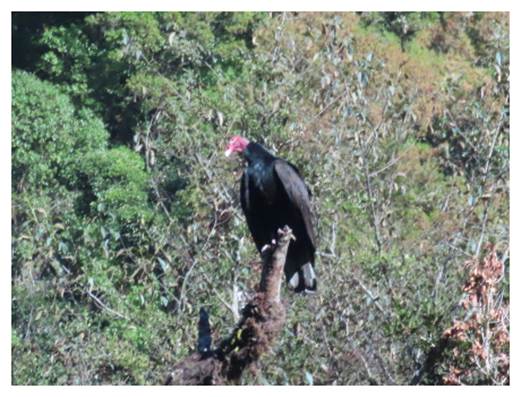
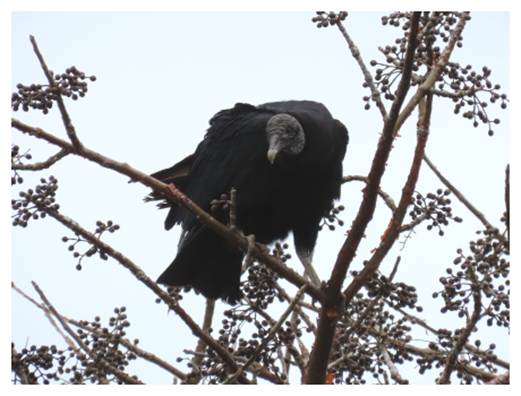
nights. A flock of c50 Black and Turkey Vultures (below) roosted
in the trees. Both are very common throughout and seen every day.
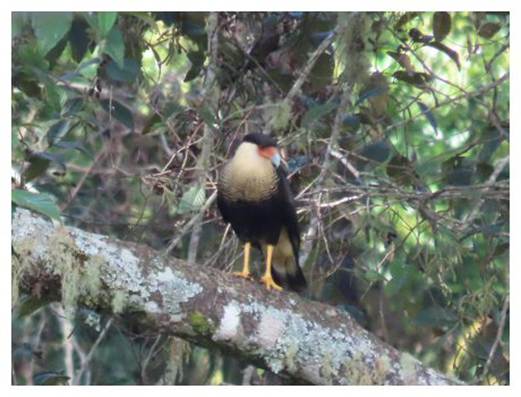
A pair of Crested Caracara were nesting (or had
recently nested). Seen most days.
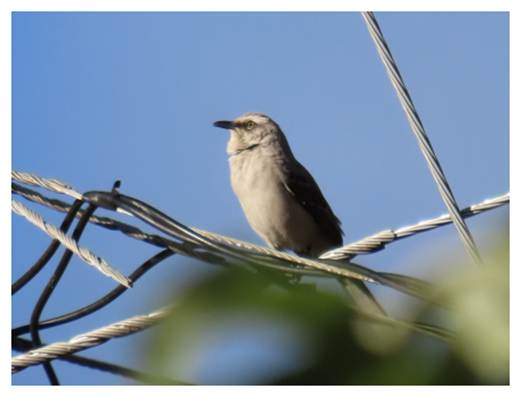
A pair of Tropical Mockingbirds sang and flocks
of Barred Parrakeets (totalling c100) flew over.
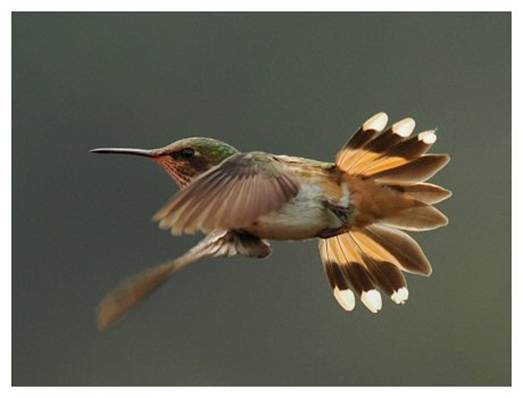
The tiny Scintillant Hummingbird (the
smallest in Costa Rica slightly smaller than Volcano H.) entertained us as the
light went. And we also had Stripe-tailed Hummingbird (but not photo’d).
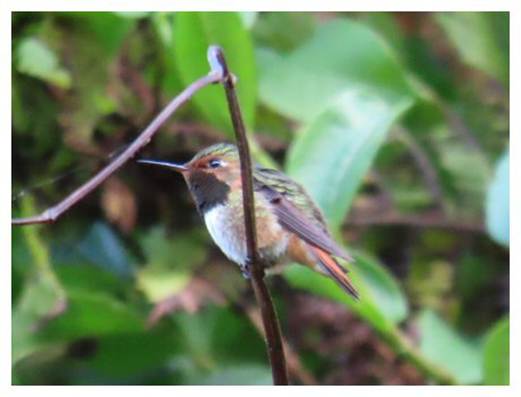
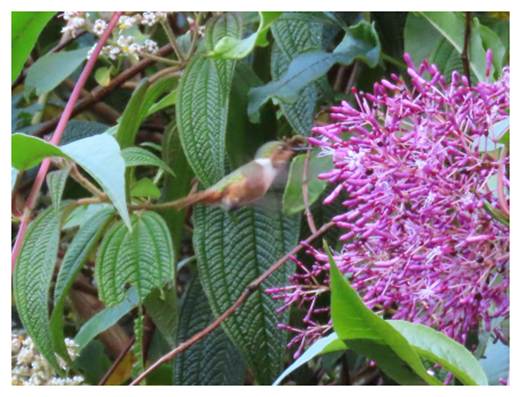
Photo of female below by Dave Reeson
Also seen: 2 Vaux’s Swift, Lesser Goldfinch, a
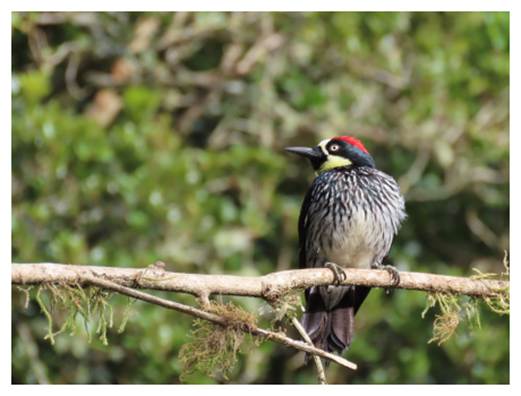
Red-tailed Hawk soaring over the ridge, 2 Acorn Woodpecker, 30 Blue-and-white
Swallow (nesting on buildings), a Grey-breasted Wood-Wren sang
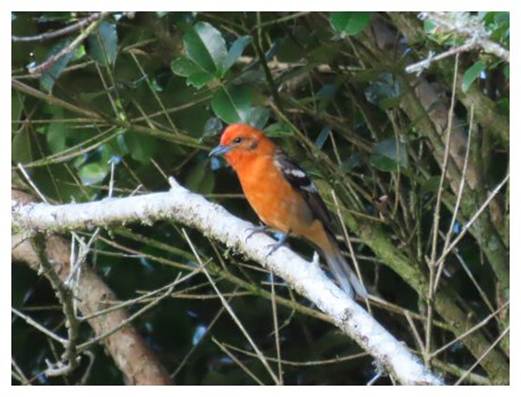
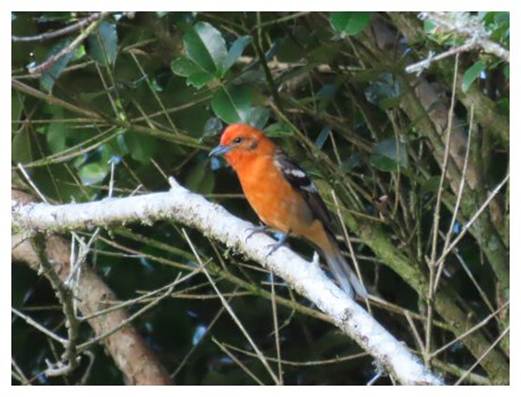
loudly and this Flame-coloured Tanager (the streaking on the back can
just be seen).
Day 2 (19th Jan) Savagre
Lodge
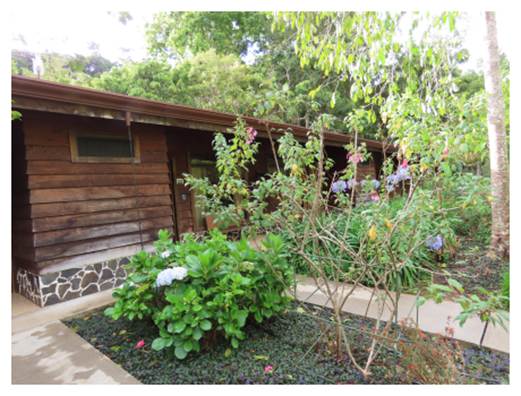
This was our accommodation A Lesser Violetear
hummingbird called continuously (we named it the Violet Chiffchaff , with a
similar monotonous call) on the bush outside the door, and chased away any
intruding birds.
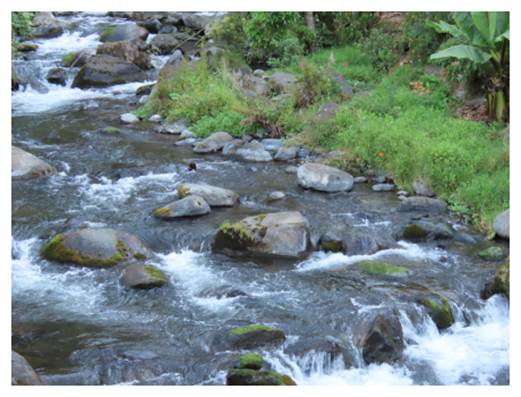
Lodge grounds and river (5:45am start)
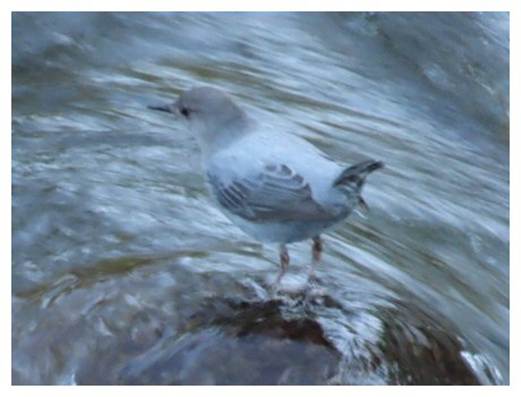
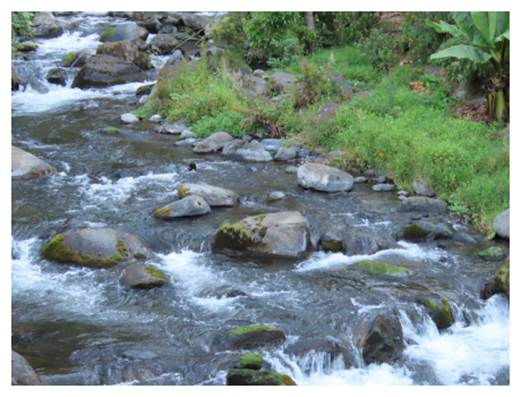
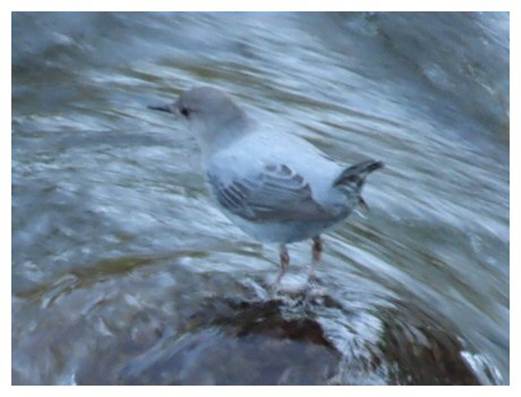
An early walk to the river proved fruitful as we got 2 Torrent
Tyrannulets and an American Dipper.
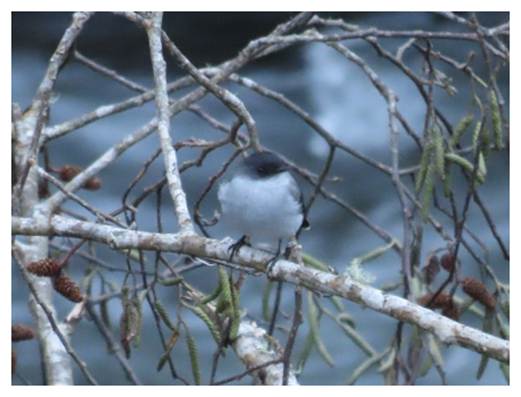
We also had Common and Sooty-capped
Chlorospingus together,
Ruddy-capped Nightingale-Thrush and a Tennessee Warbler.
Oak Forest
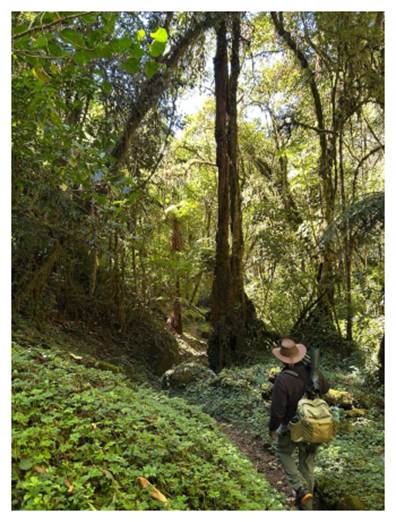
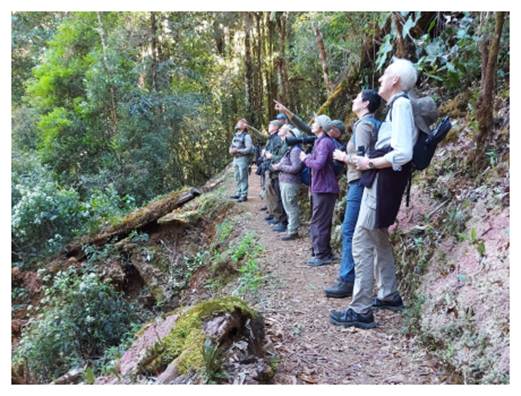
The Costa Rican Limos (i.e. Jeeps !) took us to the top of
the nearby hill (Los Robbles) and we walked back down
the steep track, through the beautiful Oak Forest.
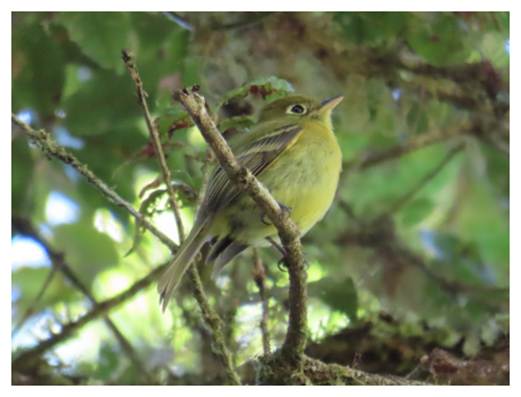
The first bird seen was this Yellowish Flycatcher.
We also had Flame-coloured, Silver-throated and Spangle-cheeked Tanagers
(latter found by Matt; two photos below), Blackburnian, Wilson’s
(5), Tennessee (3) and Flame-throated Warblers.
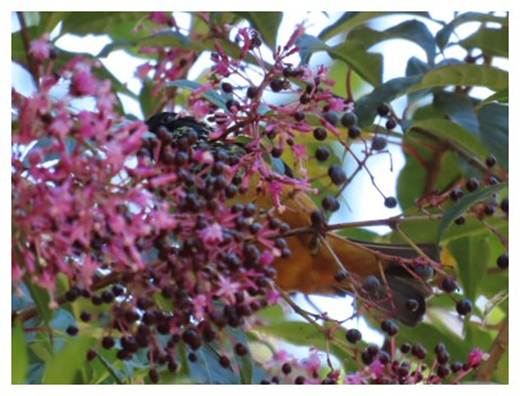

Plus 3 Collared Whitestart
(below) and Yellow-winged Vireo.
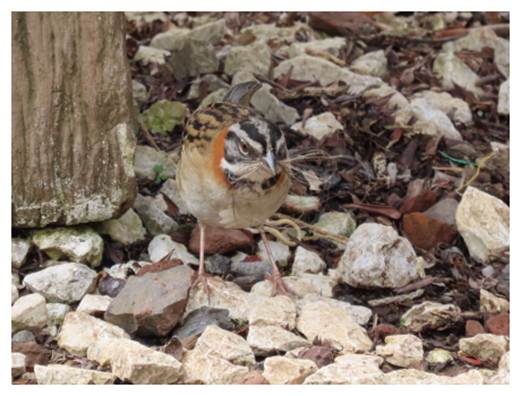
Also Ochraceous Wren and Ochraceous
Pewee, which I think is the photo below and not the smaller Northern
Tufted Flycatcher, which we also saw. And Black-capped
Flycatcher again.
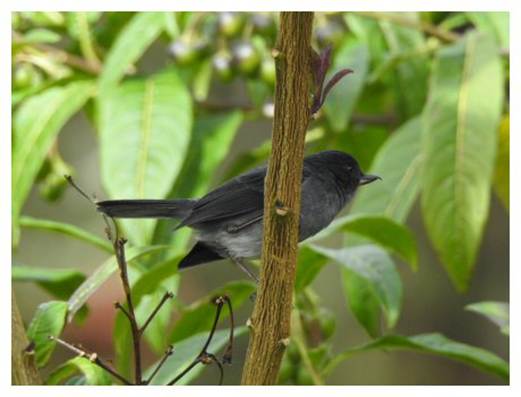
I found a lovely pair of Golden-browed Chlorophonia near
the top of a tall tree. (Below is the female the male is even more spectacular,
with bright yellow patches underneath and on top of the head). Then had Hairy
and Acorn Woodpeckers; Yellow-thighed Finch,
Streak-headed Woodcreeper, Red-tailed Hawk; and we heard (only) Silver-fronted
Tapaculo (which we hunted for as it called from dense cover next to a
stream, for about 10 minutes) and Rufous-browed Peppershrike.
The Sulphur-winged Parakeet below
was at a nest-hole. Ruddy Pigeon was seen and heard calling, plus 3 Ruddy
Woodcreepers, 8 White-collared Swift over and a Tree Turtle lurked
high in the canopy !
At the end of the trail, 3 Lesser Goldfinch fed on
weed seeds.

Cafe and Mountain Road
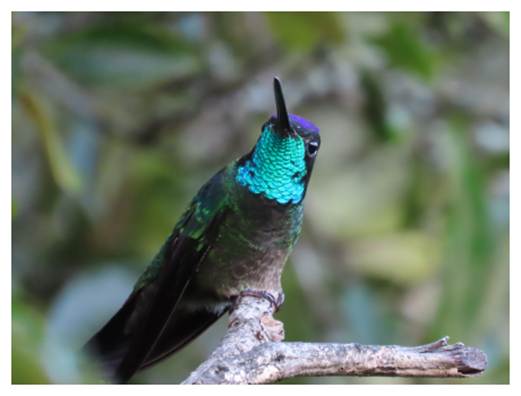
We visited a cafe (Soda Mirador) with hummingbird feeders - Talamanca
Hummingbirds, White-throated Mountaingems and
tiny Volcano Hummingbirds. Also Fiery-throated Hummingbirds.
In the undergrowth beneath the feeders was a Buff-fronted
Quail-Dove (below) and a Spotted Wood-Quail.

It was also an opportunity to photo some of the commoner
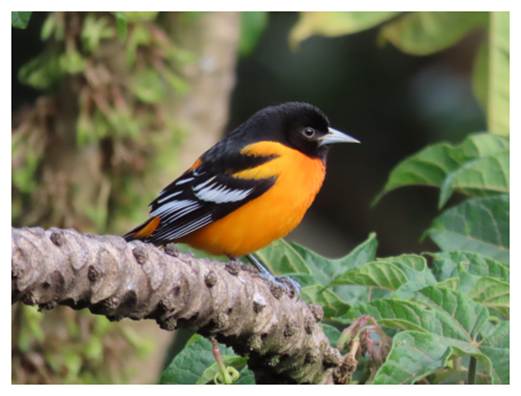
birds the beautiful Baltimore Oriole, Blue-Grey Tanager and Acorn
Woodpecker.
We then went to a more open area and walked along the road,
where Matt found this lovely Black-faced Solitaire.
Other birds seen: 3 Mountain Elaenia, 25 Blue-and-white Swallow,
3 White-collared Swift (and a small Swift sp.), and 3 Band-tailed
Pigeon.
Day 3 (20th Jan) Quetzal, Paramo
and Transit
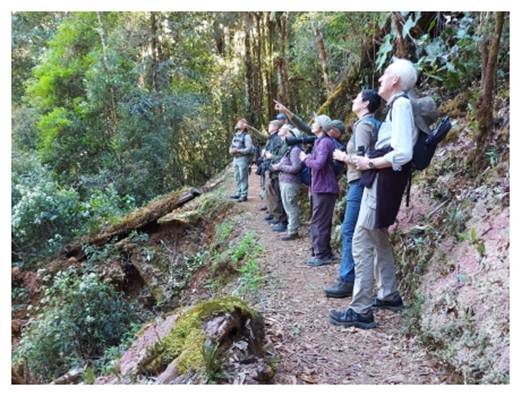
We set off before dawn so as to be standing at a known
Quetzal feeding site (with c25 other people), where wild Avocados were
fruiting, at first light. After a nervy wait, the first movement was seen in
the trees nearby and a male Resplendent Quetzal gradually appeared out
of the gloom. And what a sight to behold it was ! The whole bird shimmers with
iridescence, and exudes a calming demeanour. It is a big bird as well, 36 cm
tall plus 60cm+ tail streamers. We watched it for an hour, but apart from a
very short flight, with tail streaming and a flash of red underside, it sat
fairly motionless. On the way out a Black Phoebe was seen by the river.
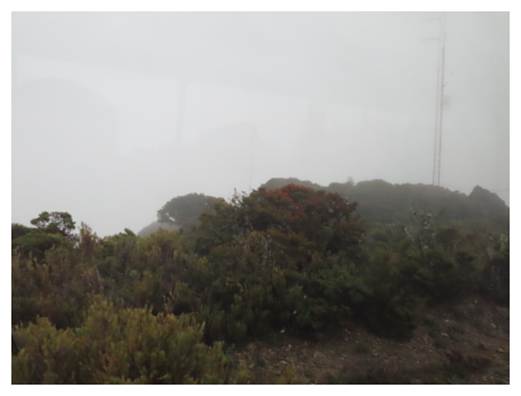
Alpine Paramo then we climbed up above
the clouds to the Paramo in the coach; a cold and misty scene above the
treeline, at 3,700m!
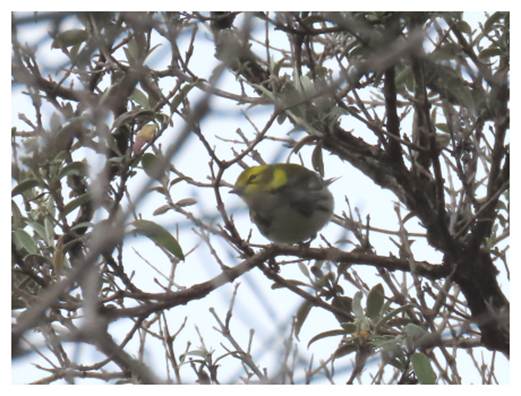
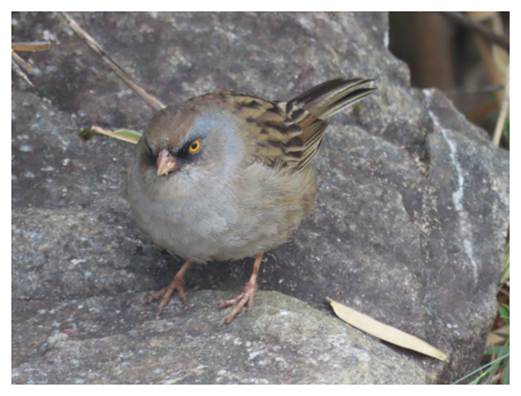
We searched around for the two endemics here: Volcano Junco
& Timberline Wren. After about an hour we had found a small troop of Sooty-capped
Chlorospingus with
accompanying birds, including a nice Black-throated Green Warbler.
When we headed back to the coach, a Volcano
Junco was found under the vehicle ! Then two more were found and
showed very well. Driving back down the steep track, we were flagged down by
another coach party, and a Timberline Wren showed
very briefly to a few of us, as it flew out of dense cover, and momentarily
perched, before disappearing again.
San Isidro Del General - Our next stop was
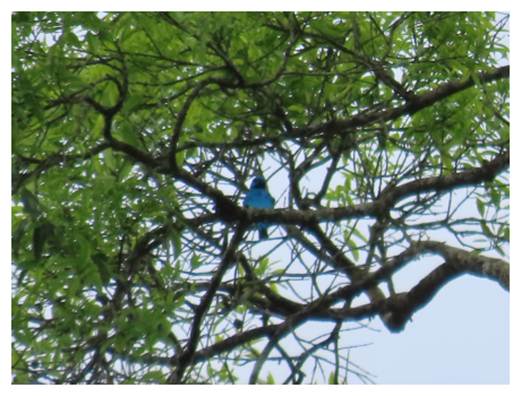
to find Turquoise Cotinga, which gave us the
run-around. When finally seen through the scope, it was a pigeon-like bird
which was a ridiculous shade of blue ! We also found Golden-hooded Tanager,
3 Tropical Mockingbirds and a Social Flycatcher. Later,
in-transit, we saw a dark-morph Red-tailed Hawk.
Reservoir then one of my favourite
stops; the familiarity of a small reservoir. The mix of birds was also
familiar, but nearly every single species was not ! The only exception to that
was a couple of Barn Swallows, but they were mixed with Blue-and-white,
Mangrove and Northern Rough-winged Swallows. A Lesser
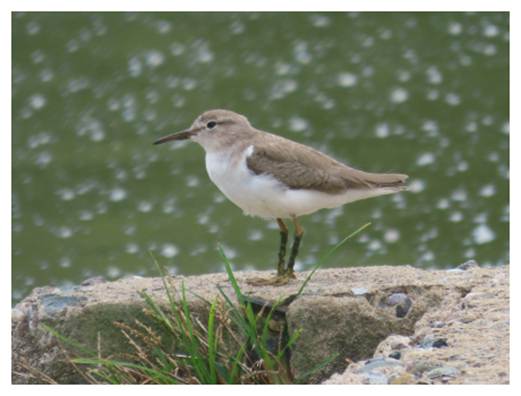
Yellowlegs was on the bank with a couple of Spotted Sandpiper
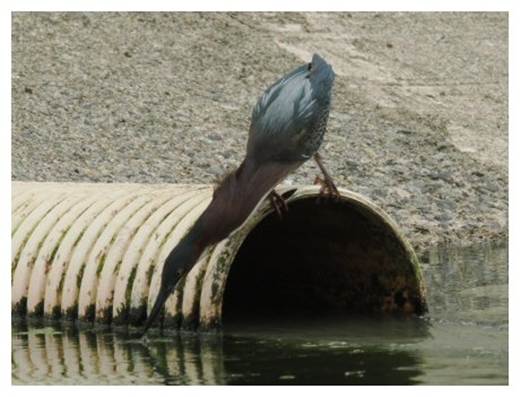
(below) and I found a Green Heron on the far side (photo by Dave Reeson).
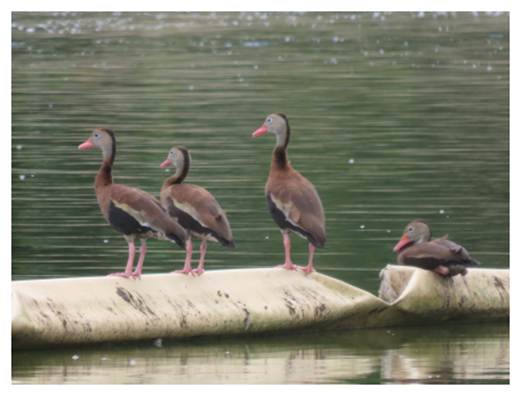
Nice to see some Black-bellied Whistling Ducks in the
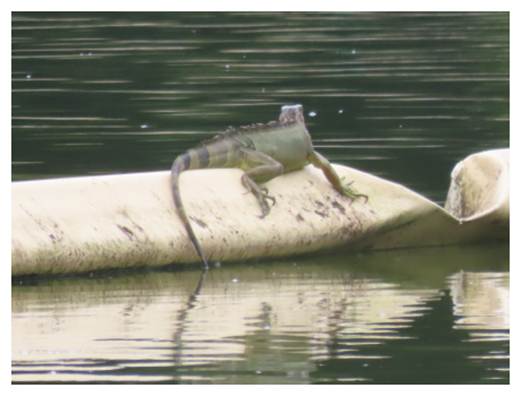
wild, (only seen in Slimbridge WWT!), but a large Green Iguana
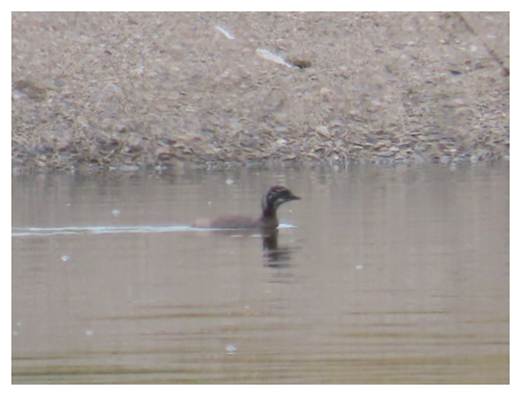
next to them was a surprise and 6 Least Grebe included the juvenile
below. Also the first Southern Lapwing for us, a couple of young Muscovy
Duck, the first (of many!) Great Kiskadee
and a Swainson s/Grey-cheeked Thrush seen briefly.
Cafe (Soda Las Veltas) The
cafe stops we had were all remarkably good, with bird-feeders and fantastic
views.
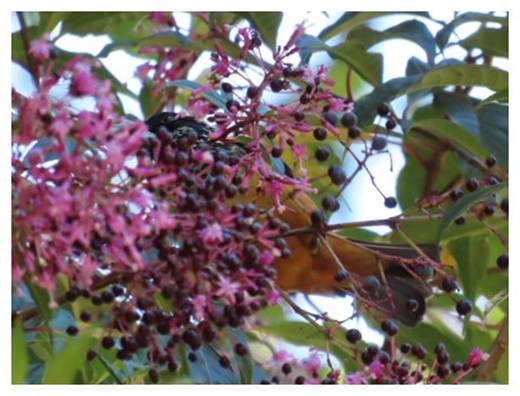
This one was the best, as they were the only ones that could
make a proper cup of tea ! As testified by Rachel.
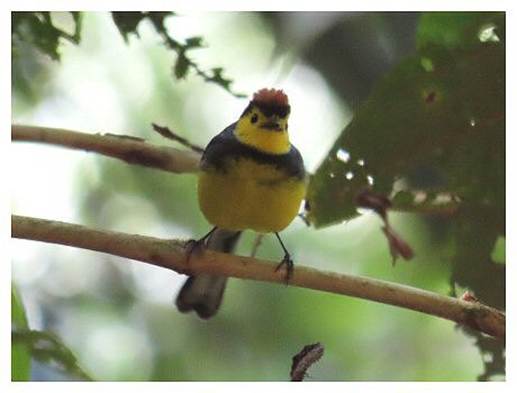
This Yellow-bellied Elaenia is showing the diagnostic
split crest and a Buff-throated Saltator and Ruddy Ground-Dove.
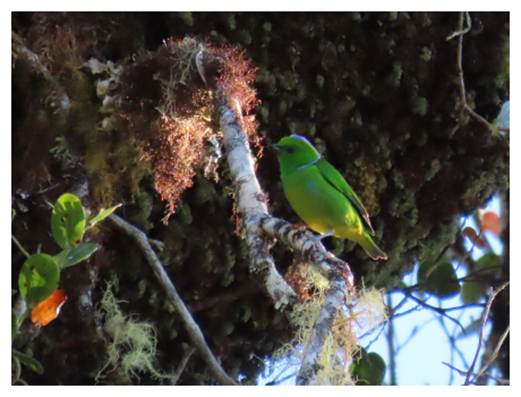
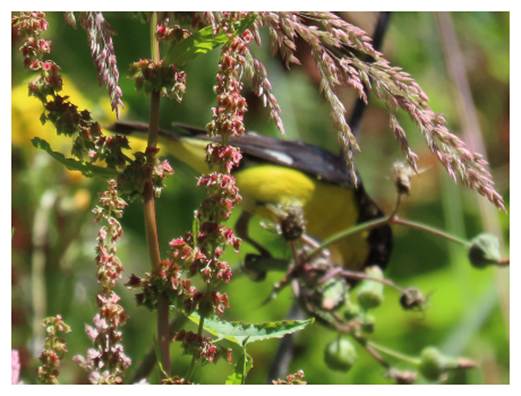
Then a Black Vulture landed in an overhead tree. We also had Blue Dacnis, Yellow-headed Caracara, Southern
House Wren and I saw a lovely male Green Honeycreeper.
Mirador de Jaco - This
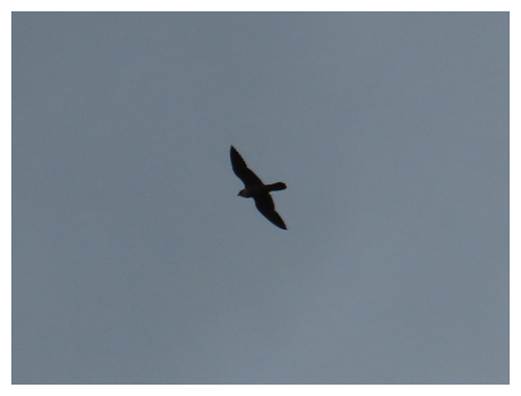
coastal layby stop was pretty good as well ! Steve shouted out a soaring
Falcon, which I quickly id d as the familiar silhouette of a Peregrine.
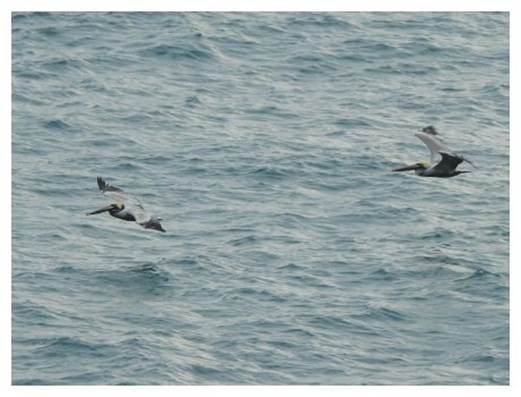
A bit of seawatching found the first 5 Royal Tern, 50 Brown Pelican (photo
by Matt Plenty), 3 Magnificent Frigatebird, the only Brown Booby
of the trip and a probable Whale’s tail far out.
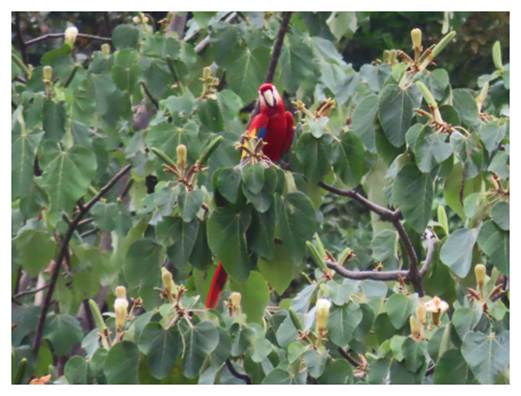
Our first flocks of wonderful Scarlet Macaws flew by
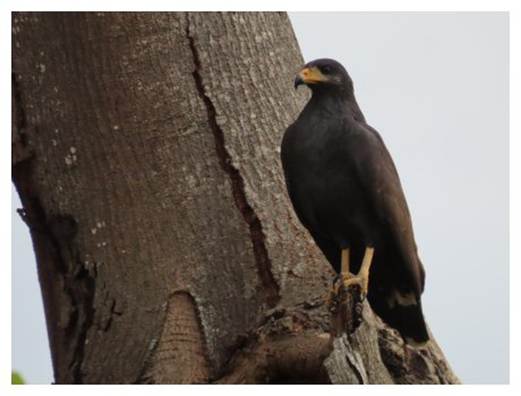
and a couple landed in trees. A flock of 8 Brown Jays went by and a Black
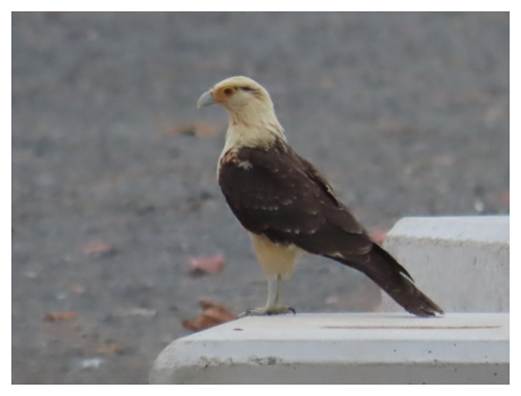
Hawk and a Yellow-headed Caracara gave fantastic views.
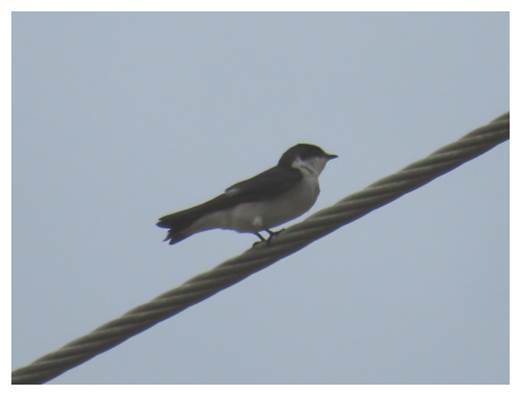
This Mangrove Swallow shows the white undertail with
black tail feathers.
Great Kiskadee
is a widespread bird, which calls its own name, Hoffman’s Woodpecker was
also seen often and Great-tailed Grackle is present wherever humans are,
but have a lot of character.
The second instalment of the trip is here.
Copyright.
Last revised: 24 Mar 2026.